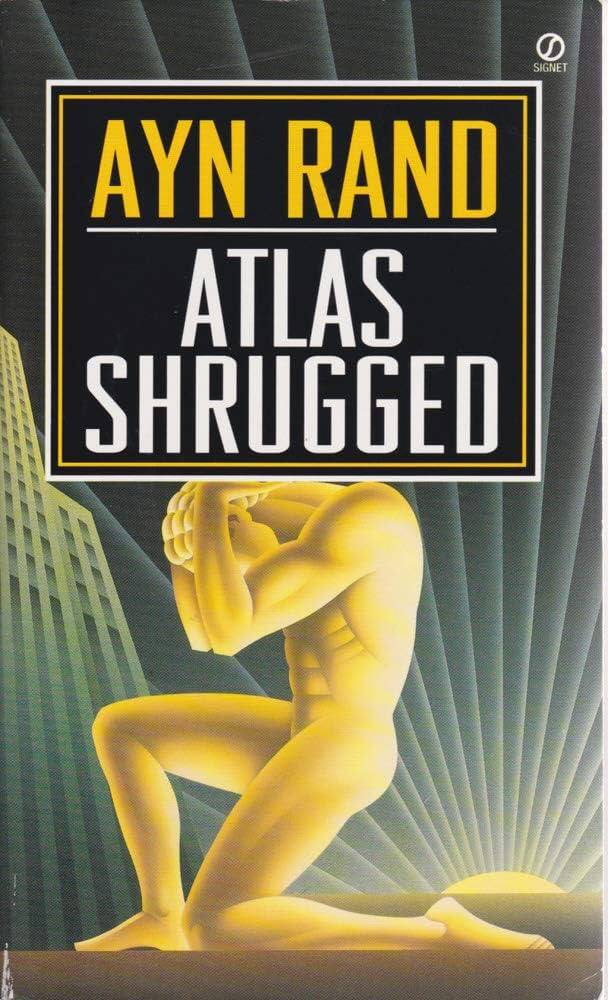
What Atlas Shrugged got right about Detroit, Shenzhen, and the cost of legislating around competition.
In Ayn Rand's Atlas Shrugged, the "20th Century Motor Company" serves as the ultimate cautionary tale: a once-great engine of American prosperity that collapses when merit, speed, and innovation are sacrificed to bureaucracy and "the common good."
For decades, Detroit was the undisputed heartbeat of the automotive world. But as we move through 2026, the data tells a different story. The Big Three aren't just facing a dip in sales; they're staring at a fundamental shift in how cars are made, sold, and powered.
While the U.S. auto industry is currently navigating high interest rates and a cooling domestic interest in EVs, Chinese automakers are hitting "China Speed" — a term now used to describe their ability to develop and launch new models twice as fast as Western legacy brands. As we look at the global landscape of 2026, the parallels are chilling. The U.S. automotive industry isn't just facing a competitor in China; it's facing its own John Galt moment.
The Motor of the World Is Moving
In the novel, the world grinds to a halt because the producers — the inventors and engineers — simply walk away, leaving the "looters" to manage crumbling infrastructure. In the real world, the motor hasn't stopped. It has simply changed addresses.
- The New Dagny Taggarts: While U.S. executives spend years navigating regulatory mazes and seeking government subsidies, Chinese firms like BYD and Xiaomi are operating with the relentless drive of Rand's protagonists. They've slashed development cycles to 18 months, treating the car not as a precious heirloom, but as a fast-evolving piece of silicon-age hardware.
- The "Anti-Dog-Eat-Dog" Act: In Atlas Shrugged, laws were passed to prevent competition and protect failing businesses. Today, the 100% tariffs on Chinese EVs serve a similar purpose. They protect Detroit in the short term, but risk turning the American market into a stagnant "Starnesville" — where consumers pay more for outdated tech while the rest of the world moves on.
The Stagnation of the "Looters"
Rand's villain, James Taggart, relied on political pull rather than better rail lines to stay ahead. The danger for the U.S. auto industry is becoming a sector that survives on lobbying rather than lithium.
If American automakers rely solely on tariff walls and "Buy American" mandates without matching the brutal efficiency and vertical integration of the East, they become the very "looters" Rand warned about — entities that consume wealth without the ability to create it at a competitive level.
Who Is John Galt? (And Where Is He Building?)
In the book, the brilliant Hank Rearden is hamstrung by a government that wants his "Rearden Metal" but hates his success. Today, the world's Hank Reardens — the battery chemists and software architects — are increasingly finding their Galt's Gulch in the hyper-competitive ecosystem of Shenzhen.
The "China Shock" is the ultimate market verdict. It's a reminder that in the cold logic of industrial reality, no amount of policy can rewrite the math.
"We can ignore reality, but we cannot ignore the consequences of ignoring reality."
The Final Warning
If Detroit doesn't rediscover the spirit of the original Henry Ford — the man who would have likely been a Randian hero — it risks becoming a museum of 20th-century glory.
The U.S. has responded with 100%+ tariffs to keep Chinese EVs out of the domestic market, but this is a double-edged sword. It protects Detroit temporarily, but also isolates U.S. automakers from the fierce competition that is currently driving innovation in the rest of the world. The lesson Rand spent a thousand pages making is the one that's hardest for any incumbent to hear: protection is not the same as progress.
Add comment
Comments